 AuthorCraft
 Book Titles
October 20, 20267 min read
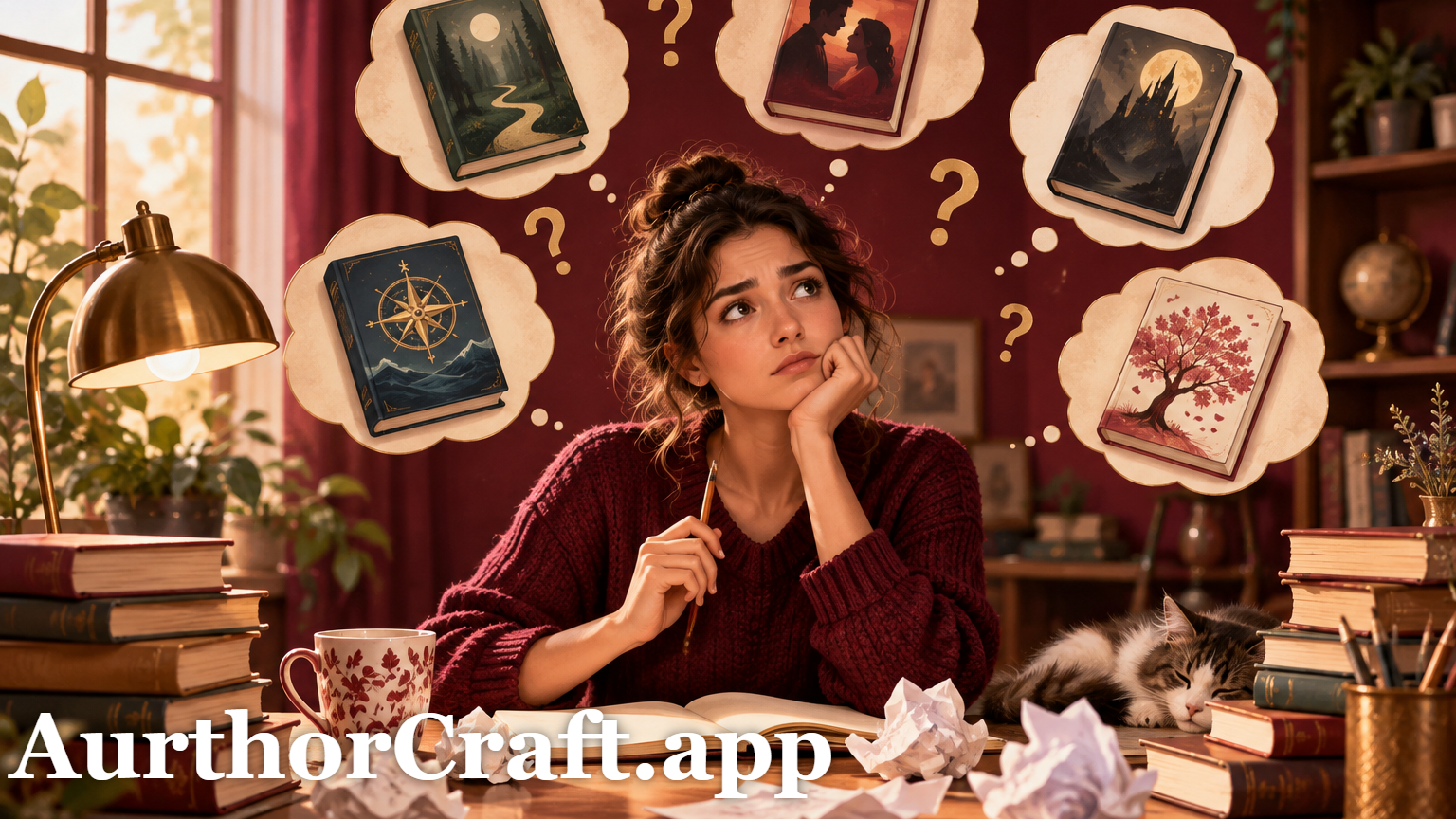
First Time Book Writers: Book Inspiration for Your Title
Stuck naming your debut book? Find fresh title inspiration, build a focused shortlist, and test your favorites without delaying your writing.
Blog · Book Reading
Build a sustainable reading routine, notice what makes books work, and turn those discoveries into stronger writing.
By AuthorCraft Team · October 22, 2026 · 7 min read

You finish a wonderful novel, admire the ending, and return to your manuscript wondering how the author made it work. A thoughtful book reading habit can help you answer that question.
For book lovers who also write, the goal is not to turn every chapter into homework. It is to read regularly, notice a few useful choices, and test those choices in your own work.
A tool such as AuthorCraft.app can support the drafting side of that process, but the foundation is simple: enjoyable reading paired with deliberate practice.
Reading gives you examples of craft in action. Instead of hearing that dialogue should reveal character, you watch a character avoid a question, change the subject, or say something that contradicts their behavior.
Regular reading can help you develop a feel for:
Those benefits are not automatic. Finishing more books does not necessarily make your prose clearer. The useful connection is between something you notice as a reader and something you deliberately try as a writer.
An ambitious reading target can feel exciting for a week. A smaller routine that fits your life is more useful over the long term.
Use these steps to create a repeatable connection between reading and writing.
Keep the habit forgiving. Missing a day does not erase earlier effort. Return at the next useful opportunity rather than doubling your quota as punishment.
Constant analysis can flatten a good reading experience. Give yourself permission to be a reader before becoming an editor.
When a scene pulls you in, stay with it. You do not need to interrupt every emotional moment to identify the technique behind it.
Place a small bookmark or make a brief highlight, then continue. Later, return to one passage that surprised, moved, or confused you.
This preserves an important source of information: your genuine response. Knowing where you felt impatient is often more useful than labeling every metaphor.
On a second look, move from reaction to explanation:
Be concrete. “Great pacing” gives you little to practice. “The author cuts away immediately after the discovery, before anyone explains it” suggests a technique you can test.
Try a three-line reading log:
Notice: The chapter opens with an interrupted task.
Effect: The disruption creates an immediate question.
Experiment: Open my next scene with the protagonist being interrupted before finishing something important.
Add the book title, author, and page or ebook location if you want to revisit the passage. Keep direct quotations clearly marked and separate from your own ideas.
You do not need a perfect reading list. You need books you want to open, plus a little variety that challenges your defaults.
If you write mysteries, read mysteries. If you write practical nonfiction, study books that explain unfamiliar ideas clearly.
Pay attention to recurring expectations: the timing of a central problem, the balance of explanation and examples, or the kind of resolution readers receive. Compare several authors rather than treating one successful book as a universal template.
Include recent books when possible, alongside older favorites, to broaden your sense of the category.
Other forms can reveal techniques you overlook in your own genre:
Choose an occasional stretch read without turning your entire reading life into a syllabus.
Rereading removes some of the pressure to discover what happens next. You can inspect how an ending is prepared, how a relationship changes, or how early details gain significance later.
Choose one chapter if rereading the whole book feels like too much.
Reading becomes especially useful when you move beyond collecting observations. Choose one discovery and give it a small writing test.
Find a paragraph whose movement you admire. Notice the pattern: perhaps two long sentences build pressure before a short sentence stops the action.
Write a new paragraph about a completely different subject using a similar rhythm. Then revise it until it sounds like you. Study the structural principle without copying distinctive language or imagery.
After reading a scene, summarize its main movements:
Not every scene follows this pattern. The point is to uncover the actual movement, then compare it with a scene in your manuscript that feels static.
For nonfiction, trace the sequence of claim, explanation, example, objection, and takeaway instead.
Revise a short passage using your chosen technique. Read the original and revision aloud, then ask:
A technique can be effective in one context and distracting in another. Keep the revision only if it serves your work.
Reading provides examples; writing gives you somewhere to test them. As an AI book-writing and Amazon KDP formatting studio for independent authors, the platform can support the drafting and preparation stages of that work.
Give any AI assistance a narrow brief. Instead of asking it to “make this better,” identify your intention: tighten an explanation, reduce repetition, or suggest alternatives for a slow opening. Evaluate those suggestions against your own reading observations and creative goals.
Formatting is a separate task from improving prose. When your manuscript is ready, formatting support can help with preparation, but you should still inspect the output and check current KDP requirements. No tool replaces editorial judgment or guarantees acceptance.
Start with an amount you can repeat comfortably, such as ten minutes. There is no universal requirement. Consistency and thoughtful application matter more than an impressive page count.
Yes. Audiobooks can help you notice dialogue, rhythm, and structure. The narrator's performance also shapes the experience, so consult the text when studying punctuation or paragraph construction.
No. You can stop when a book does not suit your interests or current needs. Before leaving it, consider whether your disengagement reveals something useful about pacing, clarity, or reader expectations.
Study general techniques rather than borrowing distinctive language, characters, or scenes. Identify the principle, apply it to different material, and revise toward your own voice.
A useful reading habit does not require racing through books or annotating every page. Start small, protect the pleasure of reading, and carry one observation at a time into your writing.
Open a book today. Notice one choice. Try one experiment. When you want support developing those experiments into a manuscript, explore AuthorCraft.app while keeping your judgment and voice at the center.
Book TitlesOctober 20, 20267 min read
Stuck naming your debut book? Find fresh title inspiration, build a focused shortlist, and test your favorites without delaying your writing.
 Writing Process
October 19, 20267 min read
One stubborn sentence should not derail your book. Learn how to diagnose a writing block, use AI thoughtfully, and build a realistic plan to finish your draft.
 Self-Publishing
October 18, 20267 min read
Discover how self-publishing can help freelancers share expertise, strengthen their reputation, and explore new income streams without giving up creative control.
Start with 30 free credits on AuthorCraft. No credit card needed.
Start free - 30 credits